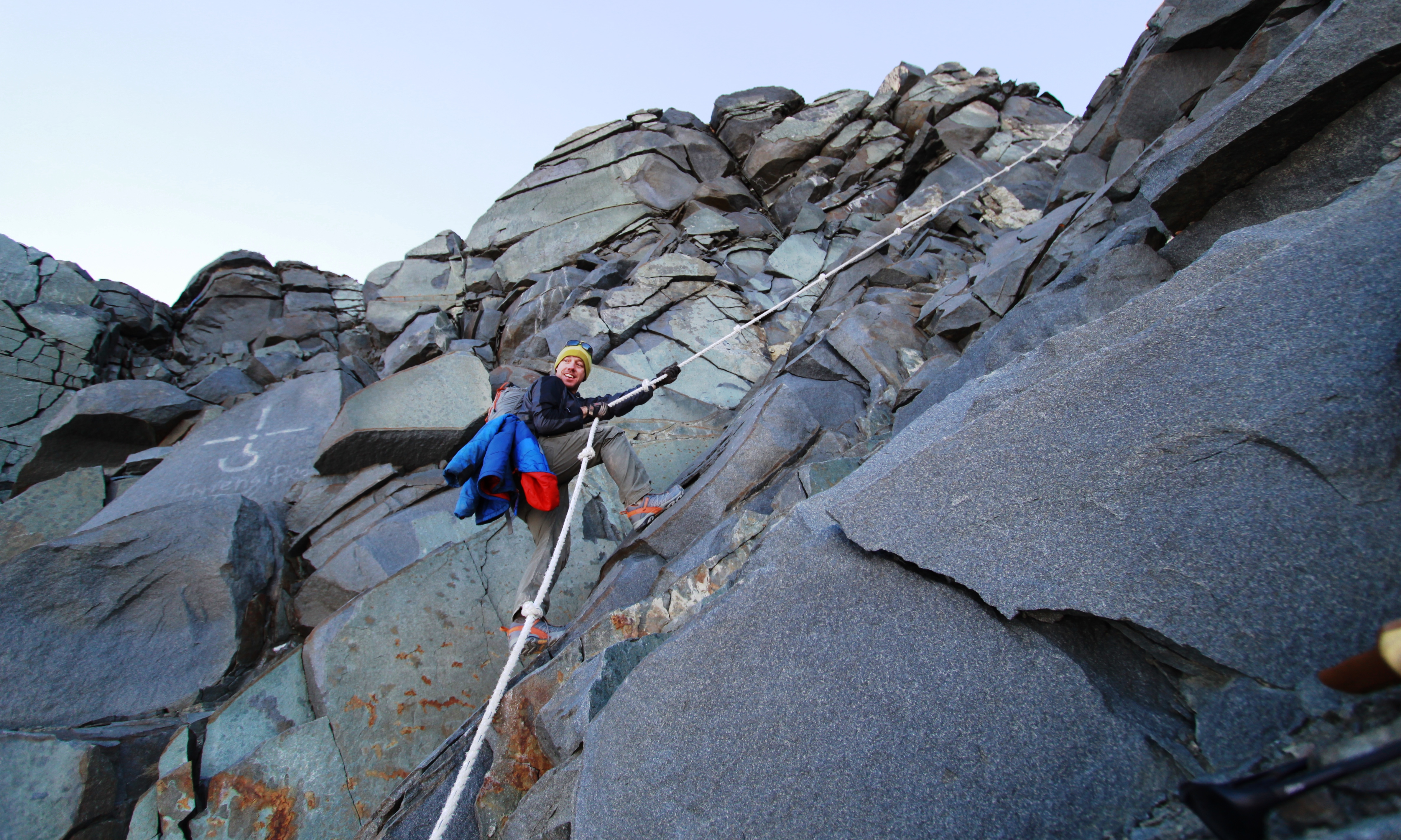
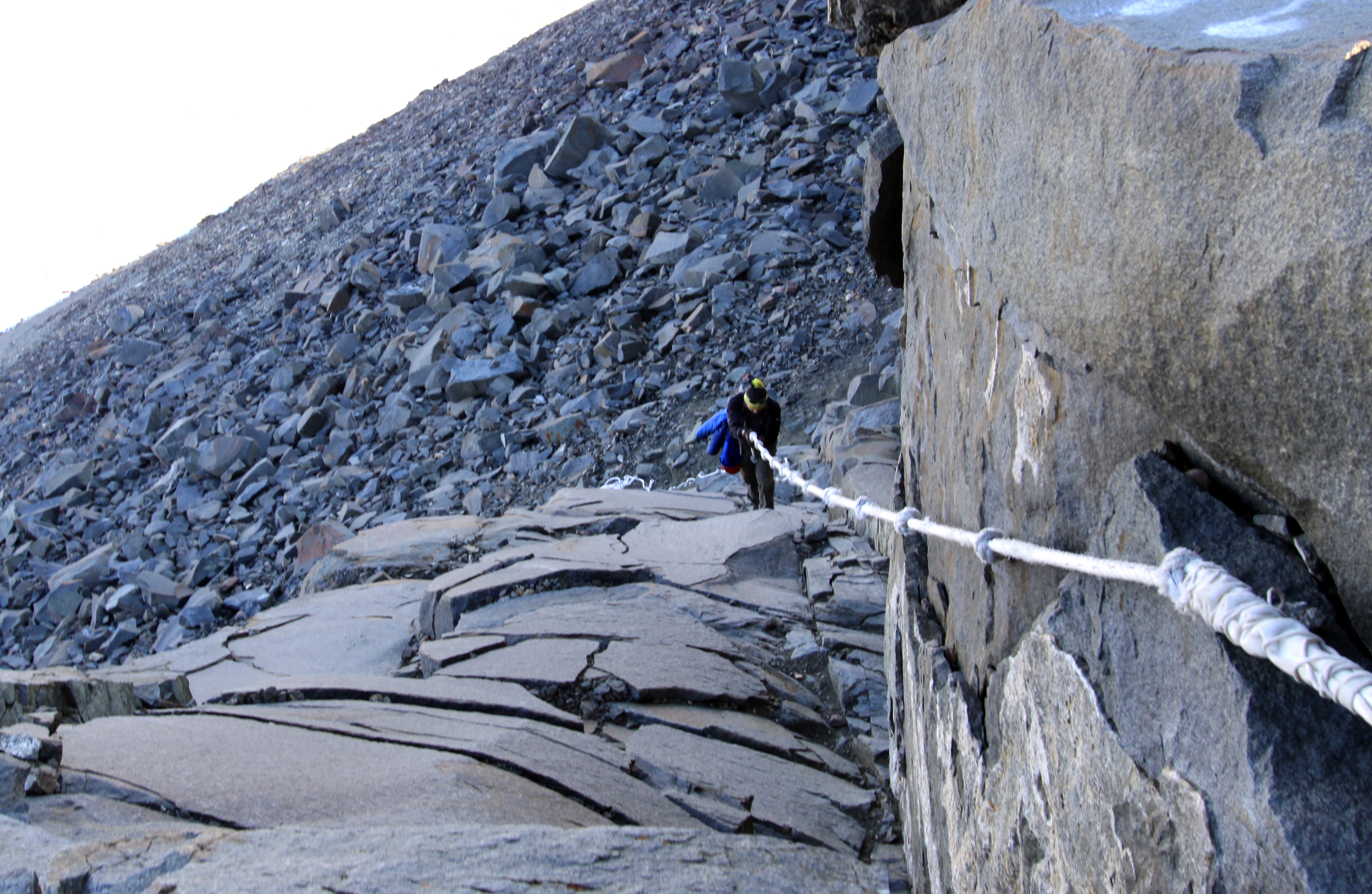
Paul and I are in Thule, doing some work for GrIT (Greenland Inland Traverse). After work we decided to do the classic climb of Mt Dundas- which is a steep but flat topped mountain just outside of town. Here’s a couple pics.
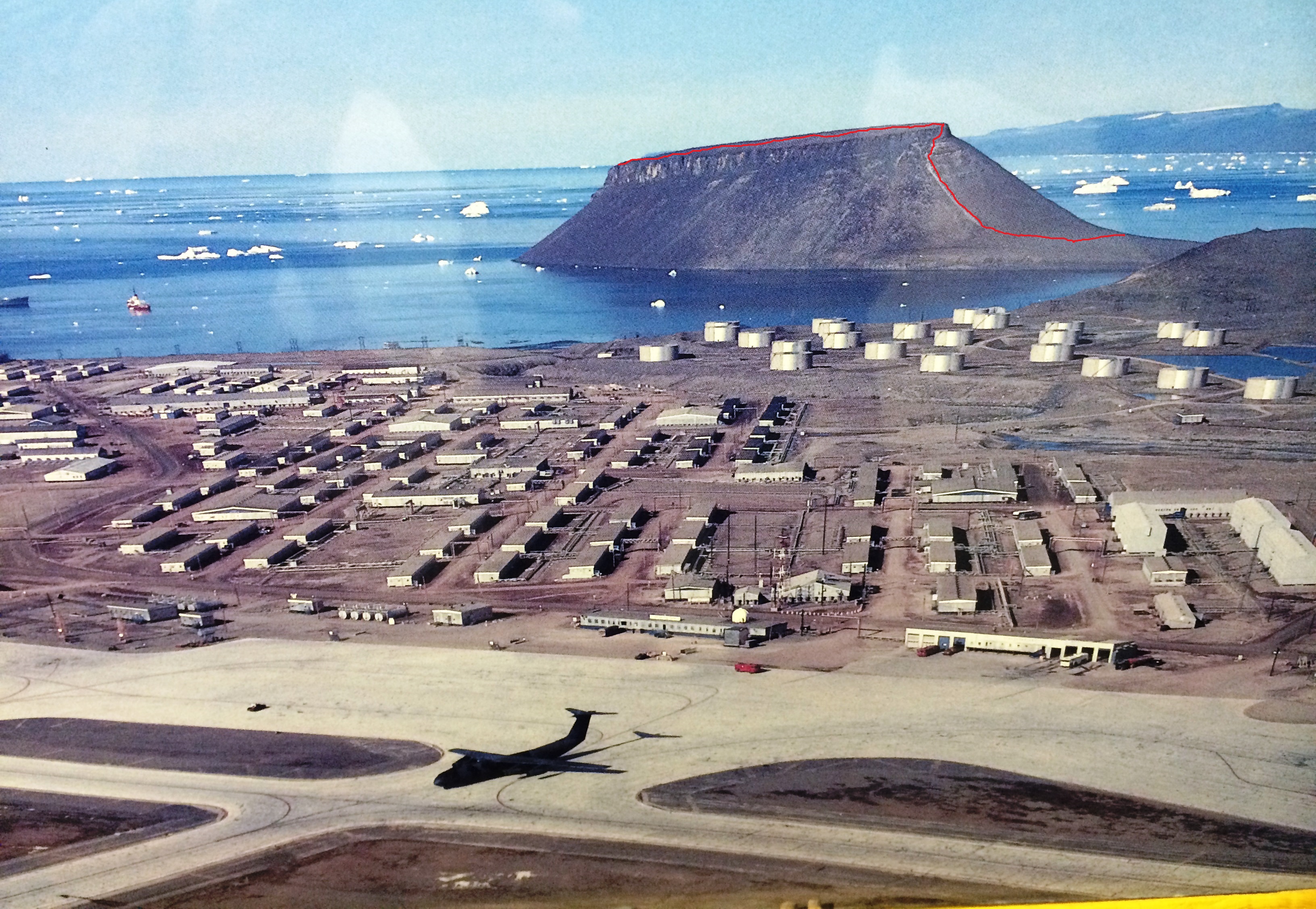
Picture of Thule taken from the air during the 1960’s, Mt Dundas in background. The trail up the mountain is highlighted in red
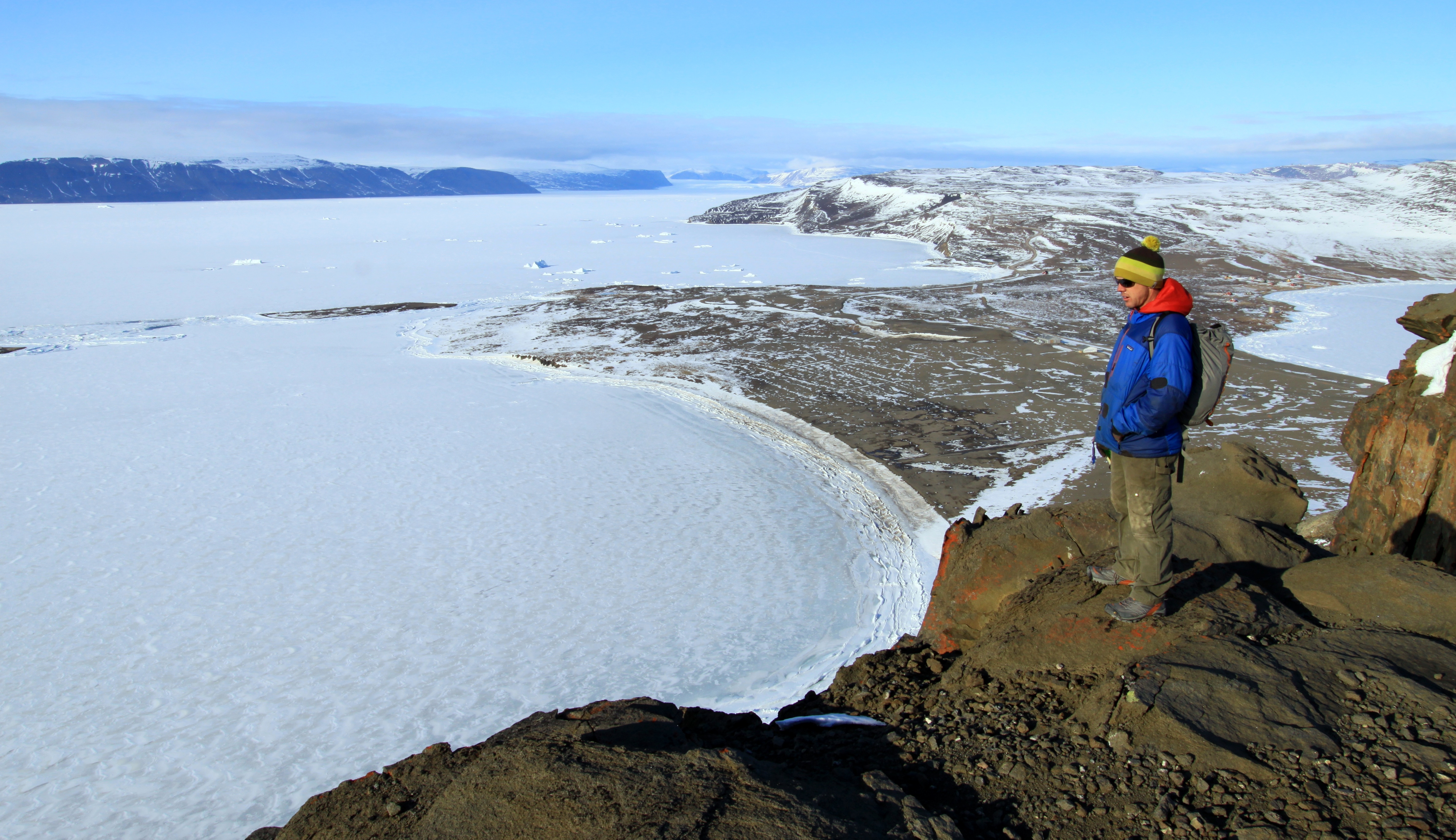
View from the top, looking north over Wolstenholme Fjord
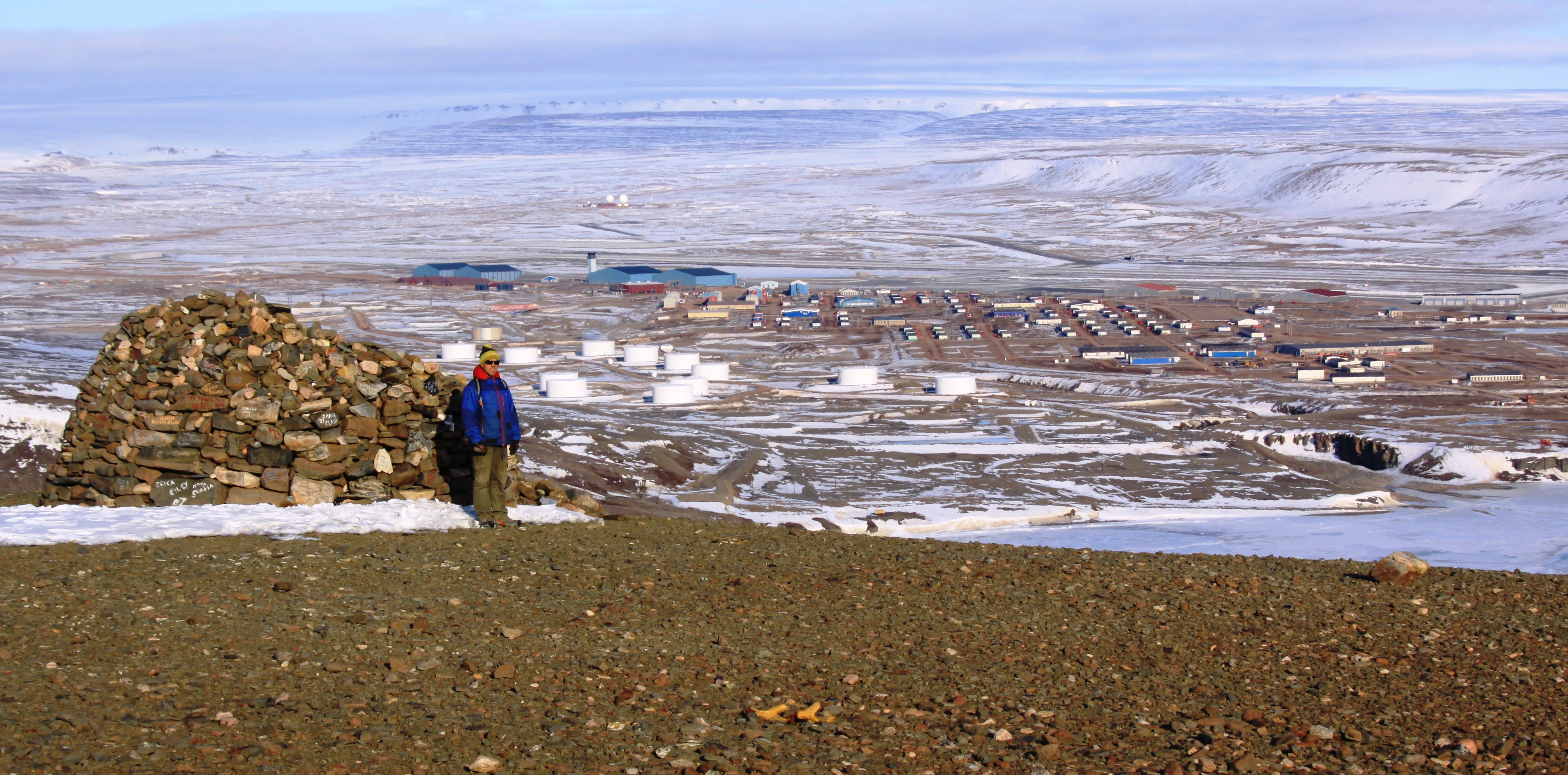
The view of Thule as it is today.
 Beyond the Backyard
Very nice homepage! Nice to meet you in Thule.
I was stationed @ Fhule AB, Greenland from Jan 1, 1958 until Jun 1, 1958 when I was transferred to Offutt AFB Bellevue, NE. I would like, if possible, to be refreshed ref; The height of Mt. Dundas in Feet. Thank you! Forrest Slater, Jr. USAF 1956-60.
Wow Forrest, you were in Thule during its heyday! That must have been a very busy, exciting, scary time! Thanks for your service! Mt. Dundas shoots straight out of the sea and tops out at 724ft.
Hey, I was showing my boyfriend pictures of Greenland to show him where I traveled…in 2007 I climb Mt Dundas and wrote my name on a rock at the top…and I was thinking how cool would it be to zoom in and see my name…well I did…and there it was!!! Erica Riley Nova Scotia!!!!!! Just thought I’d share this cool experience with you! Thanks :)
Very Cool! Thanks for the comment!
I was stationed at Thule from June of 1955 to June of 1956.I was in the Army as a radio operator, but the ground forces at Thule used telephone communications. Time on my hands. When an audition notice was posted for an announcer opening at radio station KBIC [Keerist, But It’s Cold], I went for it. I was picked by the USAF major [Mortenson] to report to South Mountain, where the tv station [KOLD, Channel 8, LOGO = black eight-ball]. They had a big map of the world on the wall behind me, and I did a live news telecast from 11:00 PM to 11:30 PM each night. I was broken in by an old pro, Ed Dawkins, a six-stripe-er in the USAF, who, Ted Williams-like, had served in WW II, then got called back up for Korea and decided to go for 20. From noon or one pm each day I had the teletype pouring out news. My job was to go through it all and select stories for the night broadcast. I was Army and the rest of the staff was all Air Force. We got along great and they were a great team to work with. Major Mortenson was the type of officer you hope to serve. He was soft-spoken, laid back, knowledgeable … you just wanted to get it right under his guidance. Thanks for this page and the opportunity to recall those beautiful memories.
Tom Corrigan, KOLD-TV, Channel 8 – Thule Air Force Base, Greenland, signing off.
Of the three tours I did at Thule, with the Air Force, I climbed Mount Dundas only once, sometime in the light season of 1976. Beautiful view in any direction as far as the eye could see. Got some great pictures.
Dundas Village was occupied by Danish civilians then. It was a communication station of some sort (been to long to remember) and was accessible 9 months by an ice road carved across the frozen bay. As a Security police working the base patrol every so often, I’d “illegally” depart the base (on a mid shift), drive to Dundas Village, and back across North Mountain. Had I been needed to respond to any situation I would have been in trouble. Thankfully, none ever occurred. By 1986 Dundas was closed as it was no longer needed, as was P-Mountain (another great site to drive to).
The people are what made Thule a good assignment. One year with people you would get close to. Do crazy, but not illegal stuff. In ’79, after working a 15-2300 shift, we returned to the barracks and found we were out of ice in the dayroom fridge. 3 of us got a ride to the bay, then walked out to an iceberg and, using an ice pick we found in the utility closet, filled a number of large trash bags with ice.
Thanks for posting the pics. It’s brought back some great memories.
I was stationed at Thule from 1978 to 1979 on a missile warning crew with the 12th Missile Warning Squadron. Was kinda scary riding on the bus to P-Mountain during Phase 2 conditions. All you could see were the phase markers along the road. Also climbed Mt. Dundas with friends. A lot of fun at the time. Also got to go out on to the glaciers in that area. Still have a cotton hat from the Canadians Camp Alert. I managed to have one of the Canadians Air Force guys get one for me on one of their supply trips to Alert, which was a lot closer to the Arctic Circle than we were at Thule. They always stopped at Thule on the way north and on the way back. I won a photo contest while there with a photo of one of the 4 scanning radars titled “The Way Home”. Enjoyed my year there but, was glad when it was over. I was back a second time in April 1980 as an investigator while stationed at SAC Headquarters when Thules tracking radar radome caught fire and burned down. Bittersweet memories!
I was e-mailed your piece on Mount Dundas because I was stationed at Thule from June ’55 through June ’56 as an Army radio operator who became the news broadcaster-announcer after auditions. I was the sole Army member of the KOLD-TV, Channel 8 AFRTS Air Force staff [behind the 8 ball] tv crew on South Mountain. I spent hours scanning an unstoppable teletype machine for news stories to edit for a nightly live televised news report lasting a half hour each night. Other duties were maintaining our film library, patching/splicing film. Great serving with a great crew.
Tom Corrigan
My Dad worked at Thule as a construction worker in 1952-53. I remember being mesmerized by his stories and photos of Greenland upon returning home. He had lots of photos of Mt. Dundas. As I recall, the construction workers did 10 hours/day, 7 days/wk, so they received very healthy over-time pay. His stint there made a real change in our family’s financial condition. Thanks for posting your wonderful photos which reawakened tons of precious family memories. I have one question – do any Eskimo natives still live in that general area? Paul
Thule was once a small village and then trading post: check out the old tales of Knud Rasmussen and Peter Freuchen. When the Americans moved in next door and built Thule Air Base, the natives were forcibly moved farther north to the village of Qaanaaq.
Thanks for more interesting info. and advice. I’ve followed up by reading several articles on Rasmussen, Freuchen and others that were very informative.
I was at Thule from 1967 to late 1968, so I was there when the B52 crash occurred. I worked for RCA Service Co. at the Thule BMEWS J-Site as shift supervisor in Rearward Communications. The crash happened in January, 24 hour night. We were coming down from J-Site to Thule Base in the shift change bus convoy when we saw a gigantic horizontal bar of flame stretching from North to South mountains, a distance of a couple miles, from our vantage point seeming to be right on Thule base, then a ball of flame rising upwards what seemed like a thousand feet. This was mid Cold War, and our immediate thought was “We’re dead meat. The war is started, Thule, the only airport for a thousand miles, is vaporized and radioactive and nobody’s coming to rescue our asses. We soon learned the crash was some seven miles out on the ice of North Star Bay. The blast shifted some buildings slightly and broke a lot of things in the BX, but The base was intact. Phew!. We of the BMEWS crew were pretty much distant observers of the cleanup, but it was massive. 4-lane highway from Thule out over the frozen bay to the crash site. Big Euclid earth movers , hundreds of dump trucks and hundreds of 50 thousand gallon tanks and a furnace to melt the ice the trucks brought in and pour into the tanks. All flown in in the dead of winter. They scooped up the ice in a several mile radius of the crash, melted it down and stored it in the tanks. When the ice breakers arrived in spring the tanks were loaded onto ships, and the tanks reportedly buried at sea. In Rearward Communications, all voice and data communications to and from Thule went through our office. We could monitor all the voice. Had a few light moments when the general commanding the cleanup ordered a plane load of American toilet paper, saying “This Danish stuff is like wax paper. It’ll cut your ass to shreds”. A world-wide search went out for batteries for the radiometers since in the cold they only lasted less than a half hour. Seems the B52 had just been refueled when they had a fire in the cockpit caused seemingly by something flammable too close to the cockpit heater. They aimed for Thule, put the plane on autopilot and bailed out. Everyone made it out and got down except the navigator whose chute caught fire and didn’t open. They weren’t wearing survival gear and all survived by wrapping themselves in their chutes until the snow cats from Thule could find them. They all landed either on base or within a mile or so.
Wow, amazing you were there for that! Apparently there was a nuclear bomb on board at the time. I believe the natives in Old Thule moved north to Qaanaaq following the event.
No, Dave, the natives were moved north when Thule base was established, years before the Broken Arrow event. There were four Nukes aboard. When the plane crashed at least one of the detonators exploded, but since the bombs weren’t armed the built-in fail-safes worked and a nuclear explosion didn’t happen. Instead plutonium was scattered over the ice for miles in all directions. Thus the extensive cleanup. They retrieved the remains of three of the nukes, but not the fourth. The fire and explosion melted through the twelve-foot ice crust so it was believed the remaining bomb is on the bottom of Northstar bay. It’s very deep, so a deep submersible was sent in in the summer to search for the bomb, but it was never found so it’s still there.
Ah!…The fourth bomb…they never found it. I was on the USCGC Edisto during the summer of ’68 pulling into Thule with several Geiger counters collecting data. That was a surprise! That whole plane crash affair was hush-hush as the agreement with the Danish government restricted nuclear bombs from entering Greenland. [I’ll be surprised if this comment board isn’t deleted as nobody wants an organized terroist group finding that nuclear bomb somewhere on the bottom of the Bay stuck in a kelp bed.] During our stay at the SAC base, we took a group of US Army folk on a pleasure cruise for a half day. I remember wondering, “Where in the hell did these Army people come from?” Did the climb up to the top of Mt. Dundas and remember the difficulty coming back down on this hill completely composed of slate. We didn’t have any climbing gear, but we were young. Come to find out that it’s a climber-killer as one ascends Mt. Everest which has a steeply sloped slate path around a huge rock to go around just before the final assault to the top. Global Warming Warning: In ’68, one could walk to Mt. Dundas from the mainland. I have a few pics to send this website of Thule, Mt. Dundas, the pleasure cruise, and the topside of a huge underground BMEWS station on southern Greenland. (Please provide an e-mail address to attach the pics witha reply, if so desired.)
I was stationed in Thule in January 1974 and left in Jan 1975. I climbed Mt Dundas several times, what a beautiful site. As a medic I experienced many medical events. The main one when a young village girl stumbled into the pens where the dog sled teams were tied up. She was brought to our ER. It was a big miracle that visiting doctor was in the Thule at the time because was able to sew up that young girls scalp! The young girl must have landed face down and she covered her have because there was hardly any dog bites to her face!! I have a picture of her weeks after the attack but I would have to go through my pictures to find it. I also have pictures of the top of Mt Dundas. Hated being away from my girlfriend but I now have good memories of my time there.
John Martinez